
%20(3).png?width=40&height=40&name=Redbird%20Flight%20logo%20(red%20bg)%20(3).png)
A pilot’s logbook is more than a regulatory requirement. It is the permanent documentary record of a flying career. From the first dual lesson to the final professional application, the logbook tells the story of where, how, and under what authority you flew. It also becomes a legal document relied upon by examiners, employers, insurers, and sometimes, attorneys.
Because of that, how time is logged matters just as much as how it is flown.
Few areas generate more confusion than the distinction between acting as pilot in command and logging pilot-in-command time. That confusion increases significantly when Aviation Training Devices, particularly Basic Aviation Training Devices (BATDs) and Advanced Aviation Training Devices (AATDs), enter the picture.
This article clarifies:
- The regulatory difference between acting as pilot in command and logging pilot-in-command time
- When multiple pilots may log pilot-in-command simultaneously
- How student, private, instrument, and professional pilots should log time
- How BATD and AATD time must be logged in different instructional scenarios
Acting as Pilot in Command Versus Logging Pilot-in-Command
Acting as Pilot in Command
Under 14 CFR 1.1, the pilot in command is defined, in part, as "the person who has final authority and responsibility for the operation and safety of the flight."
That authority is reinforced by 14 CFR 91.3, which assigns full responsibility for the operation of the aircraft to the pilot in command.
Only one person may act as pilot in command at any given time. This is a legal and operational role, not a logging privilege.
Logging Pilot-in-Command
Logging pilot-in-command time is governed by 14 CFR 61.51(e). Logging is a record-keeping activity and does not require that the pilot be acting as pilot in command.
The FAA explicitly allows multiple pilots to log pilot-in-command simultaneously, provided each pilot independently meets the regulatory conditions for logging.
This distinction is critical for:
- Dual instruction
- Safety pilot operations
- Multi-pilot environments
- Simulator and training device use
Logging Pilot-in-Command as a Student Pilot
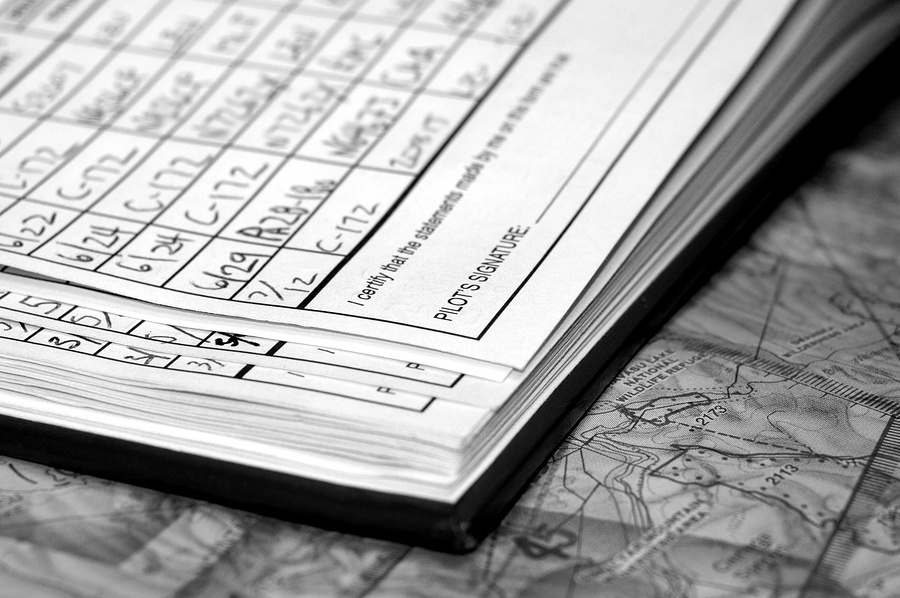
For student pilots, the rule is intentionally narrow.
Under 14 CFR 61.51(e)(4), a student pilot may log pilot-in-command time only when:
- S/he is the sole occupant of the aircraft or performing PIC duties in an airship requiring more than one pilot flight crewmember;
- The flight is conducted under a valid solo endorsement; and
- The student is, in fact, undergoing training for a pilot certificate or rating.
During dual instruction, the instructor acts as pilot in command, and the student logs dual-received (but not pilot-in-command).
During solo flight, the student is both acting as pilot in command and logging pilot-in-command time. This is true only in aircraft. No form of aviation training device is approved for logging pilot-in-command time, even during unsupervised simulator sessions. Read more about logging ATD time here.
Logging Pilot-in-Command as a Private, Instrument-Rated, or Commercial Pilot
Once certificated, logging options expand significantly.
Sole Manipulator of the Controls
Under 14 CFR 61.51(e)(1)(i), a pilot may log pilot-in-command time when rated in the category and class of aircraft and acting as the sole manipulator of the controls. This is true even if another pilot is acting as pilot in command.
For example, say you fly with a friend who is also rated. Before the flight, you agree that s/he will act as pilot in command. If you hand-fly for 30 minutes, you may still log that 30 minutes as pilot-in-command time because you were the sole manipulator.
Dual Instruction After Certification
A common misconception is that pilots cannot log pilot-in-command time while receiving instruction for endorsements such as complex, high-performance, and tailwheel.
This is incorrect. As long as the pilot is rated in the category and class, s/he may log pilot-in-command as sole manipulator while simultaneously logging dual received. The instructor may log pilot in command as an authorized instructor under 14 CFR 61.51(e)(3).
Safety Pilot Operations
When flying simulated instrument conditions under 14 CFR 91.109(b), the safety pilot is a required crewmember, and the pilots must agree before the flight who is acting as pilot in command.
FAA interpretations confirm:
- The pilot under the hood may log pilot-in-command as sole manipulator.
- The safety pilot may log pilot-in-command if acting as pilot in command.
- Both pilots may log pilot-in-command simultaneously.
The Rules Change in Aviation Training Devices
When training in Basic or Advanced Aviation Training Devices, the regulatory framework changes significantly.
Logging aviation training device time is governed primarily by 14 CFR 61.51, 61.57, and 61.65. AC 61-136B clarifies which tasks may be credited when ATDs are used under these Parts.
Since BATDs and AATDs are not aircraft and do not generate flight time under the aforementioned regulations, pilot-in-command time cannot be logged. This is true regardless of certificate level or instructor presence.
Logging AATD and BATD Time: Three Common Scenarios
1. Solo Simulator Pilot With No Instructor Present
A certificated pilot using a Basic or Advanced Aviation Training Device without an instructor may log only what the regulations explicitly allow.
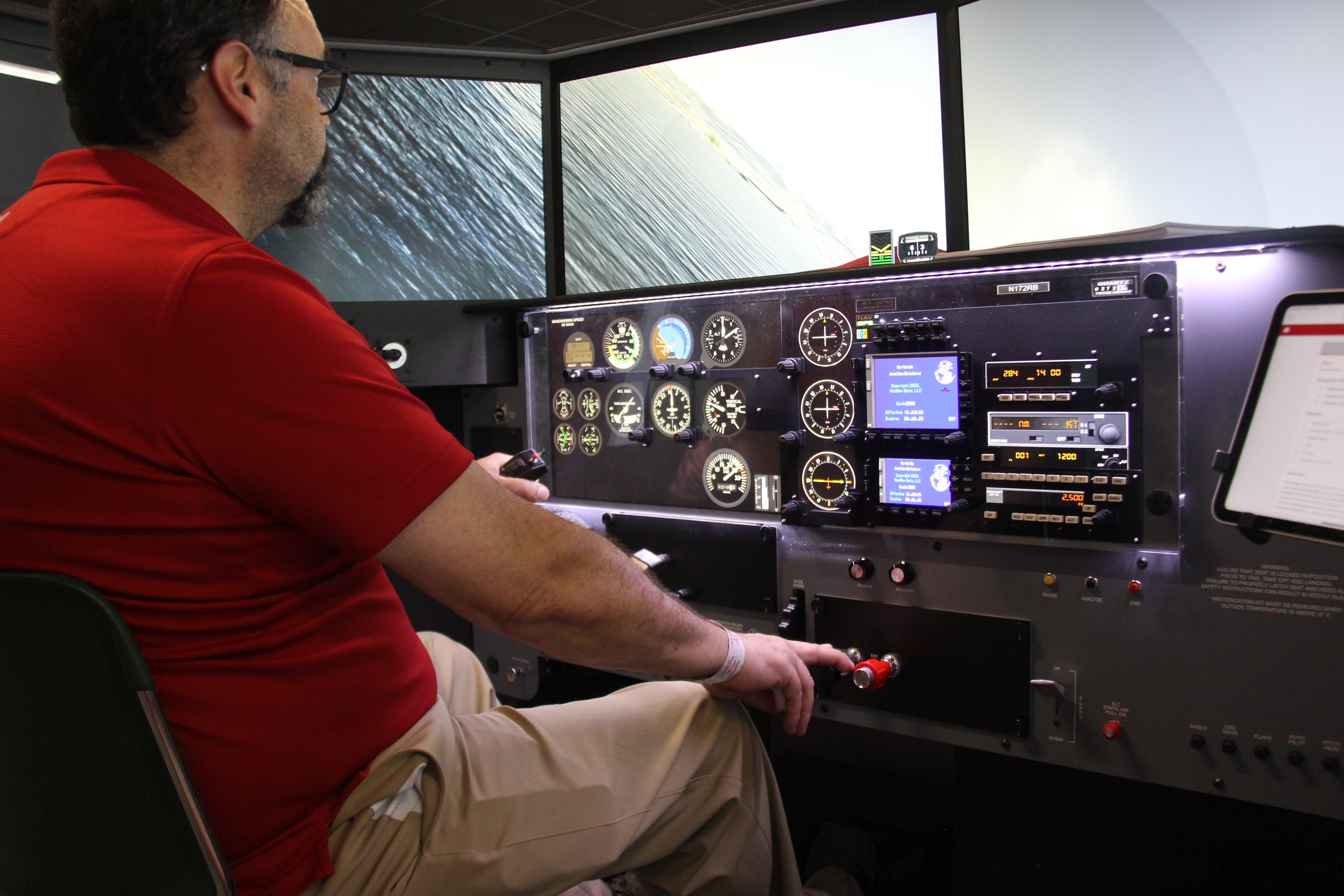
Pilot-in-command time, dual-received, dual-given, and total flight time are not permitted. However, while ATD time may not be logged as total flight time, it can and should be logged separately as ATD time where allowed.
Permitted entries include simulated instrument time, instrument approaches (if the device is approved for the task), holding procedures (if approved), and instrument currency tasks under 14 CFR 61.57(c).
How To Log the Time
- Aircraft make and model: AATD Redbird FMX (or similar)
- Time column: record in a separate simulator or ATD column
- Conditions: simulated instrument only
- Remarks: specify tasks accomplished
2. Simulator Pilot Receiving Instruction From a CFI
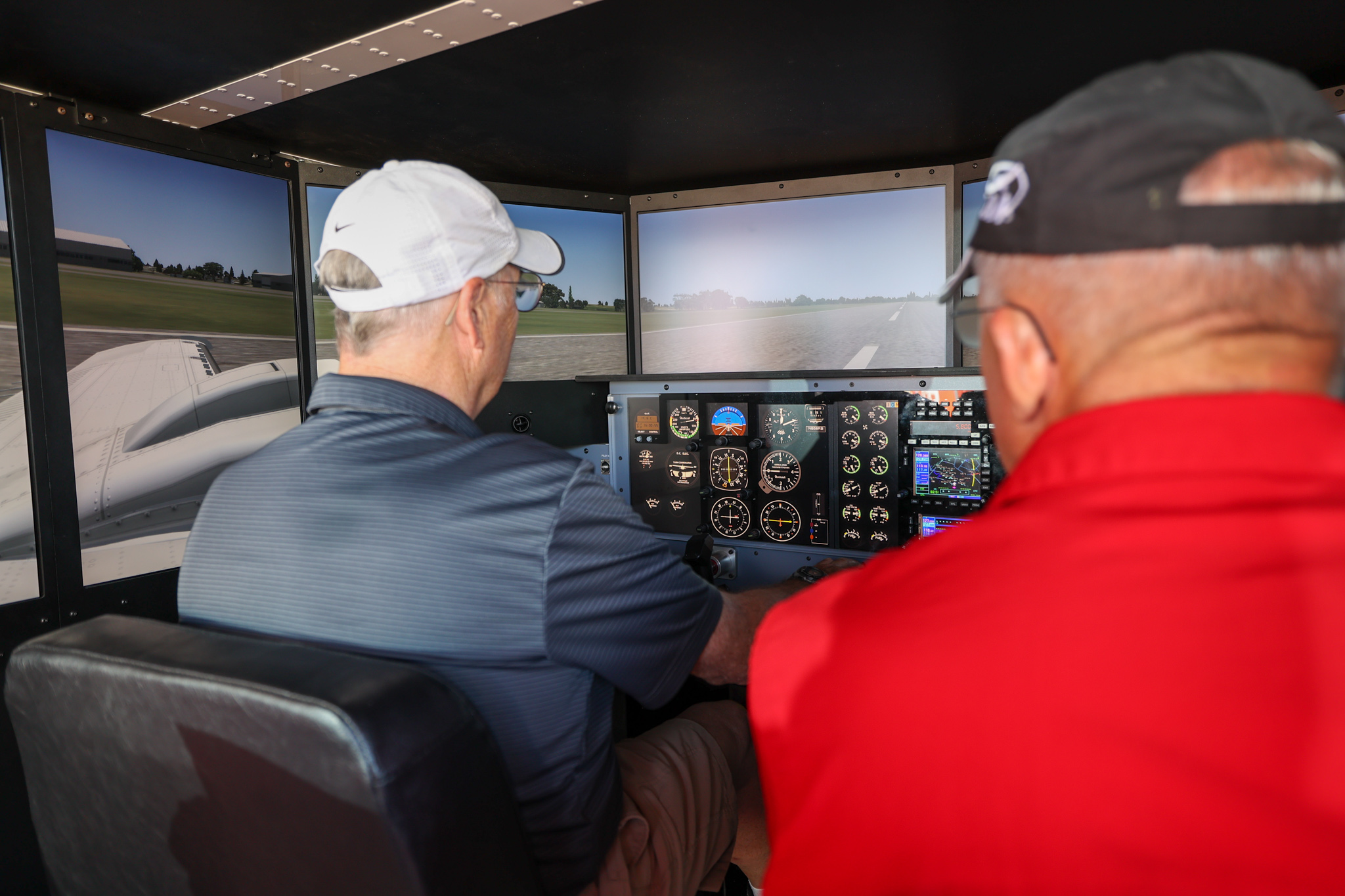
When a CFI provides instruction in a Basic or Advanced Aviation Training Device, the pilot may log dual-received, simulated instrument time, instrument approaches and holding procedures (as authorized), and time toward an instrument rating or instrument currency (subject to regulatory limits).
The pilot may not log pilot-in-command time, total flight time, or cross-country time. Some pilots mistakenly log total time for aviation training device sessions. This is incorrect. ATD time is not flight time under FAA definitions and, as such, it should be logged separately.
For more information on logging ATD time, download our free guide to Understanding Aviation Training Devices.
3. CFI Giving Instruction in a BATD or AATD
A CFI providing instruction in an aviation training device may log dual-given, instructor time, and simulator or ATD time. S/he may not log pilot-in-command time or total flight time.
Although the instructor has authority over the session, PIC is defined only for aircraft operations, and ATDs fall outside that definition. This distinction is critical for CFIs who later apply for airline or Part 135 positions, where pilot-in-command definitions are scrutinized carefully.
Why the FAA Draws This Line
The FAA distinguishes between aircraft operations where pilot-in-command authority exists and training devices where no aircraft, airspace integration, or legal pilot-in-command authority exists.
Even high-fidelity Advanced Aviation Training Devices are not aircraft under 14 CFR 1.1. Therefore:
- No acting as pilot in command
- No logging pilot-in-command time
- No total flight time
This distinction is firm and frequently misunderstood.
Professional Flying and Employer Expectations
While FAA regulations define what is legal to log, employers define what they will accept.
Airlines often interpret ‘pilot-in-command time’ to mean time in which the pilot signed for the aircraft and had operational command authority. They often want acting PIC or captain time. This can differ from FAA logging privileges.
In this context, best practices include the following:
- Maintaining a separate column or annotation for acting pilot in command or captain time;
- Preserving raw FAA legal logbook entries; and
- Being prepared to explain the logging methodology clearly and consistently.
The same principle applies to corporate aviation, charter operations, and military flight experience.
The Bottom Line
A clean, consistent, regulation-compliant logbook reduces checkride friction, prevents interview surprises, protects you in audits or disputes, and reflects professional discipline.
The FAA gives pilots considerable flexibility, but only within clearly defined boundaries, especially when simulators and training devices are involved.
You need to show that you understand the difference between authority and manipulation, aircraft and training device, and acting and logging. If you do, your logbook will tell a story that is accurate, defensible, and respected from flight one to final interview.
Share this
-2.jpeg)
Logging Pilot in Command Time
The A to Z of ATDs