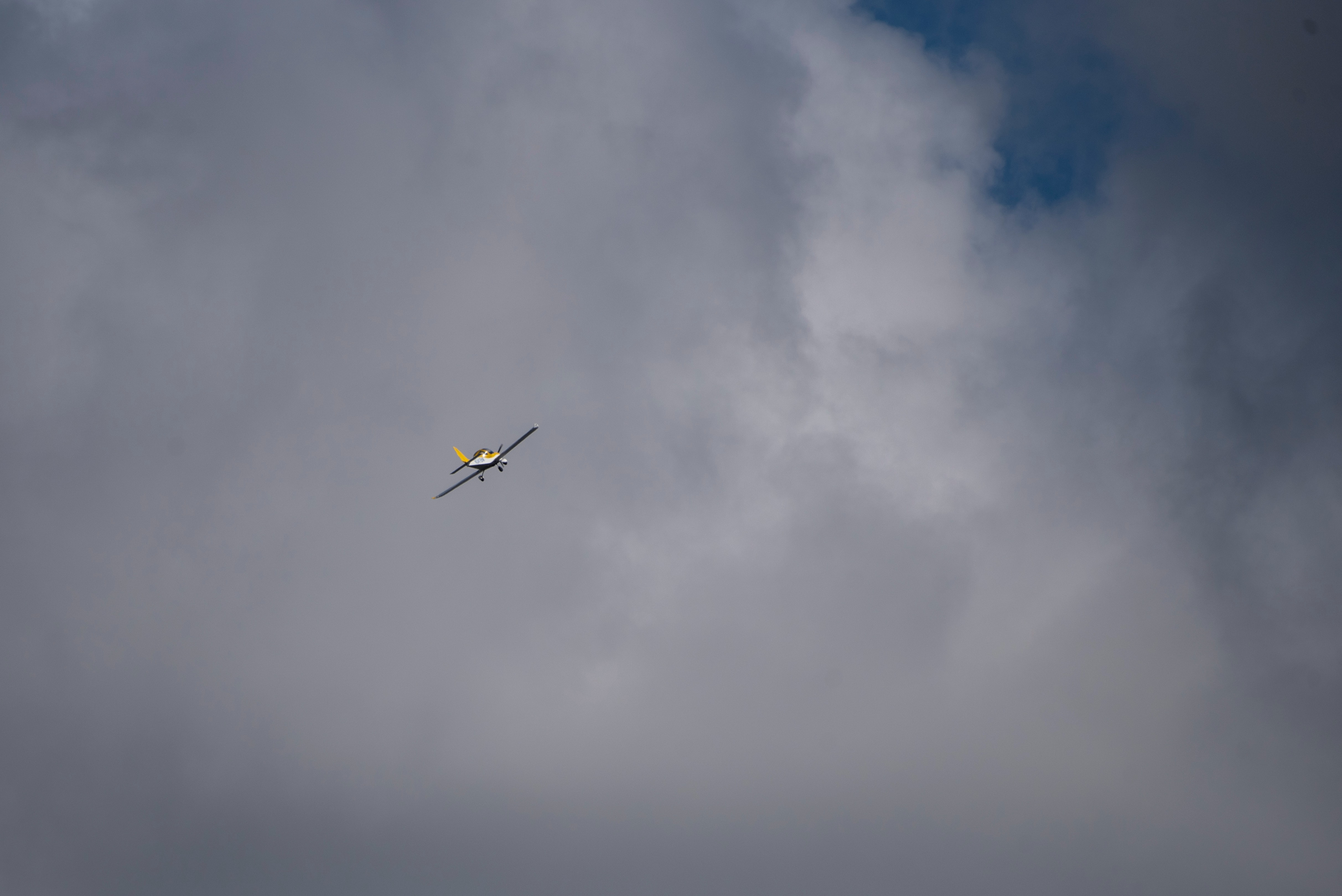


Yes, you did read the title of this article correctly! Go find the weather.
However, before you jump to conclusions, let me clarify that I’m talking only to instrument-rated pilots and/or instrument students and their flight instructors.
As instrument pilots, we train to fly in instrument meteorological conditions (IMC). This means that the weather conditions require us to fly primarily by reference to instruments and thus, under instrument flight rules (IFR). IMC should not be confused with IFR. IMC describes the actual weather conditions, while IFR describes the rules under which we fly.
IFR training is hard work. However, many pilots consider it an essential skill to learn and maintain proficiency.
Earning an instrument rating is very challenging but also extremely rewarding when achieved. Flying in IMC provides some very memorable and unique experiences in aviation.
Why Instrument Training Skips IMC
-1.jpg?width=1000&height=667&name=mael-balland-hUKIOqJlGOk-unsplash%20(1)-1.jpg)
Unfortunately, many instrument students have never (or rarely) been in actual IMC. The reasons for this are many.
- Perhaps IMC weather never presents itself during training.
- Or when there is IMC, it is un-flyable due to what I like to call the big three: ice, low ceilings/visibility, and/or convective activity.
- Maybe the CFII is not comfortable with real IMC due to a lack of experience themselves.
All of those are solid reasons not to go.
The FAA standards are “minimum requirements” by law. They do not require you to fly in actual IMC conditions, but that is where we operate as IFR pilots. Is it really safe for an instrument pilot to accept training that just meets the bare minimum requirements? A solid grounding in the whys and whats of IFR is as important as the hows.
So, why go find the weather and go hood-less? After all, that beloved hood can always be removed in VFR. For beginning pilots, going into actual IMC can be unnerving, knowing that you can’t just remove the hood and say “your airplane” or simply reorient yourself by gazing towards the horizon that has kept your wings and pitch level for so long. There’s a psychological impact of knowing that you just can’t look out at the horizon.
The Case for Training in the Soup
Being afraid or timid about actual IMC is normal and not just for new instrument students. The only cure for this is actual IMC exposure with your trusted CFII. And if your instructor won’t do it, then find one who will.
Your fatigue level is totally different in real IMC versus the hood. Getting exposure to this early on is critical, so you know what to expect. The only way to know how much you can handle is to do it.
Starting early on in your training is a great way to build up your fatigue tolerance and find your limitations. Remember, the most taxing part of IMC flying is at the end, during the instrument approach. Your energy level and reflexes may not be at their best.
Being in IMC heightens your awareness and skill in managing weather and fuel burn. Demystifying what’s on the radar versus what it feels, looks, and sounds like is another great eye-opener. You’re in the system, flying with other IFR pilots. The real world of IFR flying can be very different from the training environment.
Bottom line, flying with foggles is easy in comparison to the real thing. We can fly foggles with less effort because there are visual cues to help us know we’re okay.
In the soup, there are no cues. It’s the time you really have to trust and rely completely on those instruments and ignore your inner ear. Things just look, sound, and feel different. Do you really want the first time you blast into the clouds to be on your own with your loved ones next to you? I certainly wouldn’t.
Where Flight Simulation Enters the Picture
Now, all that being said, there is a solid case for good flight simulators as well. Using an Advanced Aviation Training Device (AATD) or a Basic Aviation Training Device (BATD) offers another excellent pathway to exposure and proficiency. These devices enable the safe and repeatable practice of complex and emergency procedures that would be risky or impossible to train in an actual aircraft.
Crucially, they eliminate the option of simply removing the hood, forcing the pilot to commit to the instrument scan and the procedure, thereby building a more robust psychological tolerance to the IMC environment. Furthermore, AATDs and BATDs are invaluable for practicing system failures, non-normal operations, and high-stress scenarios like partial panel approaches or single-engine procedures, which are essential skills but rarely feasible to train to completion in the real world without significant risk…all while knowing you can’t take the hood off.
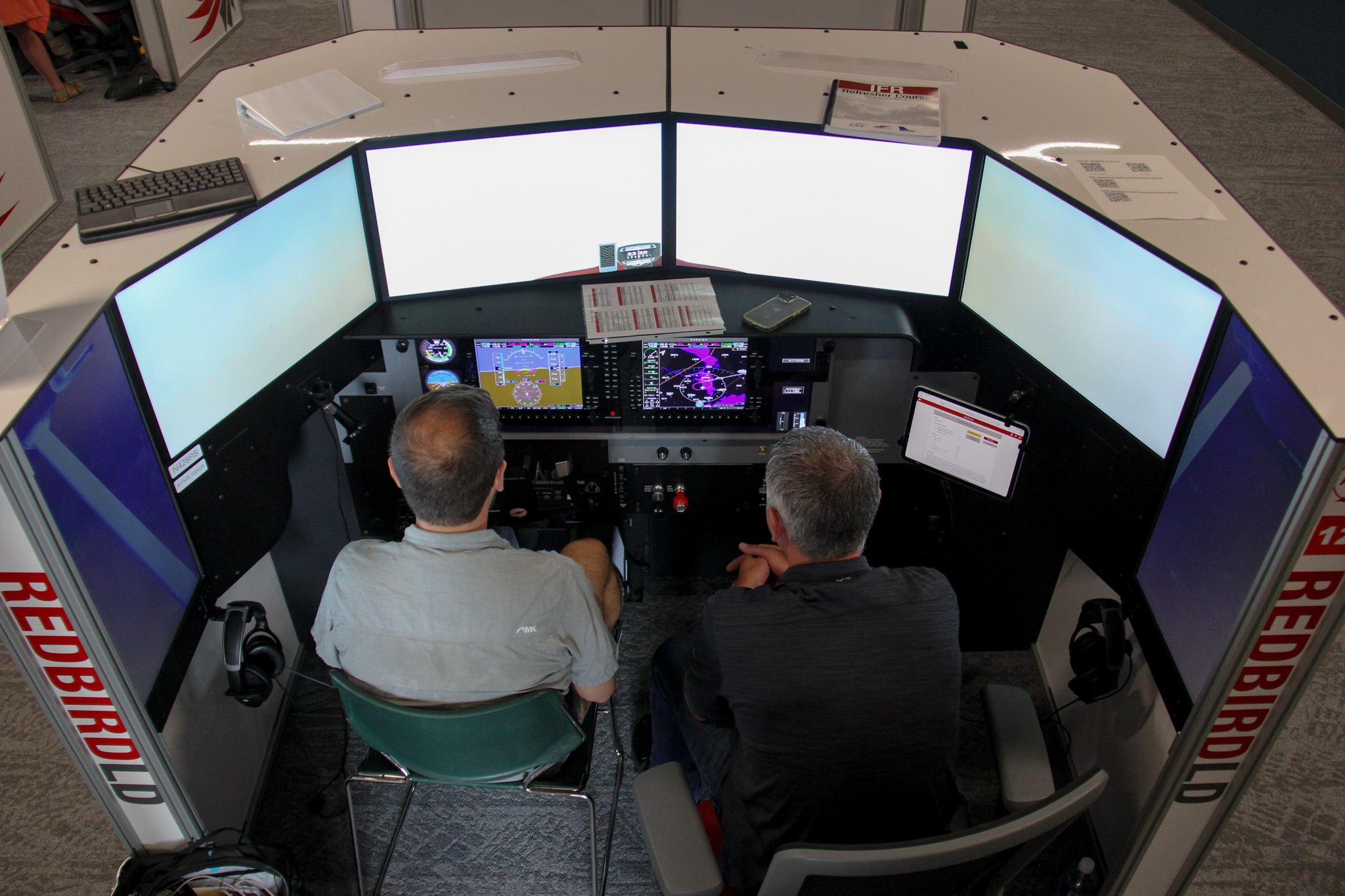
In many ways, the simulator experience can be superior to flying with a hood or foggles in an airplane.
- Simulators provide a cost-effective environment where the session can be paused, debriefed, and repeated instantly, maximizing learning efficiency.
- They are not constrained by the "Big 3" of ice, low ceilings/visibility, or convective activity, meaning critical IFR time can be logged regardless of the actual weather outside.
- They also provide a much more realistic full-motion or full-visual environment compared to the limited view under a hood in VFR, better replicating the heightened workload and stress of flying an approach to minimums in true IMC.
This focused, scenario-based training builds confidence and skill without the energy drain and expense of real-world flying, preparing the pilot to handle the emotional and physical fatigue of actual IMC before they ever encounter it alone.
Preflight Planning Is Critical
When I say, "go find the weather," I am not saying you should blast off into any old IMC. Whether you're training in real IMC or in a flight simulator, have a plan and an out.
An "out" could be VFR near your route or training area, or high enough ceilings that, if needed, you could descend into VFR and return home. An ideal scenario is departing VFR and flying towards IMC. It is always better to fly toward the weather, knowing that you can make the 180 and return home VFR. Always have enough fuel to fly to VFR conditions, and don't let 'getting there' be part of the problem.
Of course, as much as we try to predict the weather, things change. So, be ready to be committed, and know that if things do change, your “out” may not be as easy as you might like or as you had planned.
The Bottom Line
Real IMC is just that: real. Some say flying in the soup is a “semi-religious” experience; an other-worldly experience that is both challenging and centering. I would agree, and many of my students have come to agree as well.
At first, it is an unnatural environment, and it’s normal to be uncomfortable. However, with proper planning, good aeronautical decision-making, solid personal minimums, and support, we learn and grow by skillfully pushing up against those areas that at first feel uncomfortable to us. There is just no substitute for the real thing. So, go find some weather, and remember to stay away from the Big 3.
Share this
.jpg)
Performing a Thorough Instrument Cockpit Check

Secondary Instrument Scans for VFR and IFR Flight