
%20(3).png?width=40&height=40&name=Redbird%20Flight%20logo%20(red%20bg)%20(3).png)
The industry’s thinking on flight simulator training just got a significant upgrade. In late March 2026, the National Flight Training Alliance (NFTA) released a set of recommendations calling for a sweeping overhaul of the Federal Aviation Administration's (FAA) Part 141 pilot school regulations. These suggestions include expanding credit and creating an entirely new category for certified flight simulators, which the organization is calling Enhanced Advanced Aviation Training Devices.
The conversation validates what flight schools that implement simulator-first curricula have known for years: Starting every lesson in a flight simulator benefits learner outcomes, cost savings, and school revenue alike.
What “Flight-Simulator-First” Means
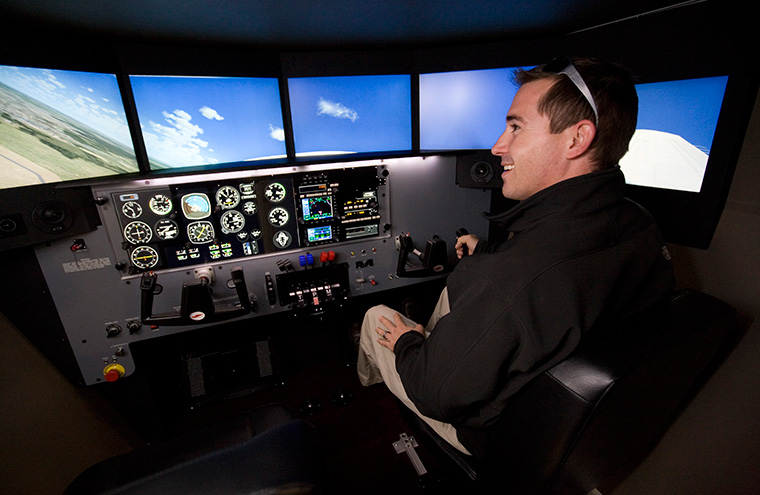
Simulator-first training isn’t simply about using a simulator or favoring it over ground or airplane instruction. It’s about sequencing. The core idea is straightforward: Before a learner ever touches an aircraft for a specific task, they practice that task in a simulator, often multiple times, until the mechanics become automatic. Then, they take those mechanics to the airplane.
At Redbird Flight, we like to say, “Learn it, sim it, fly it.” This approach inverts the traditional model, in which the aircraft is both the teaching and performance environment. Introducing a learner to a new maneuver in an airplane means they are managing the stresses of real flight, communicating with air traffic controllers, monitoring engine instruments, and trying to absorb flight instruction all at once. That is a significant cognitive load, and it compresses the ceiling on how much a learner can retain in a given lesson.
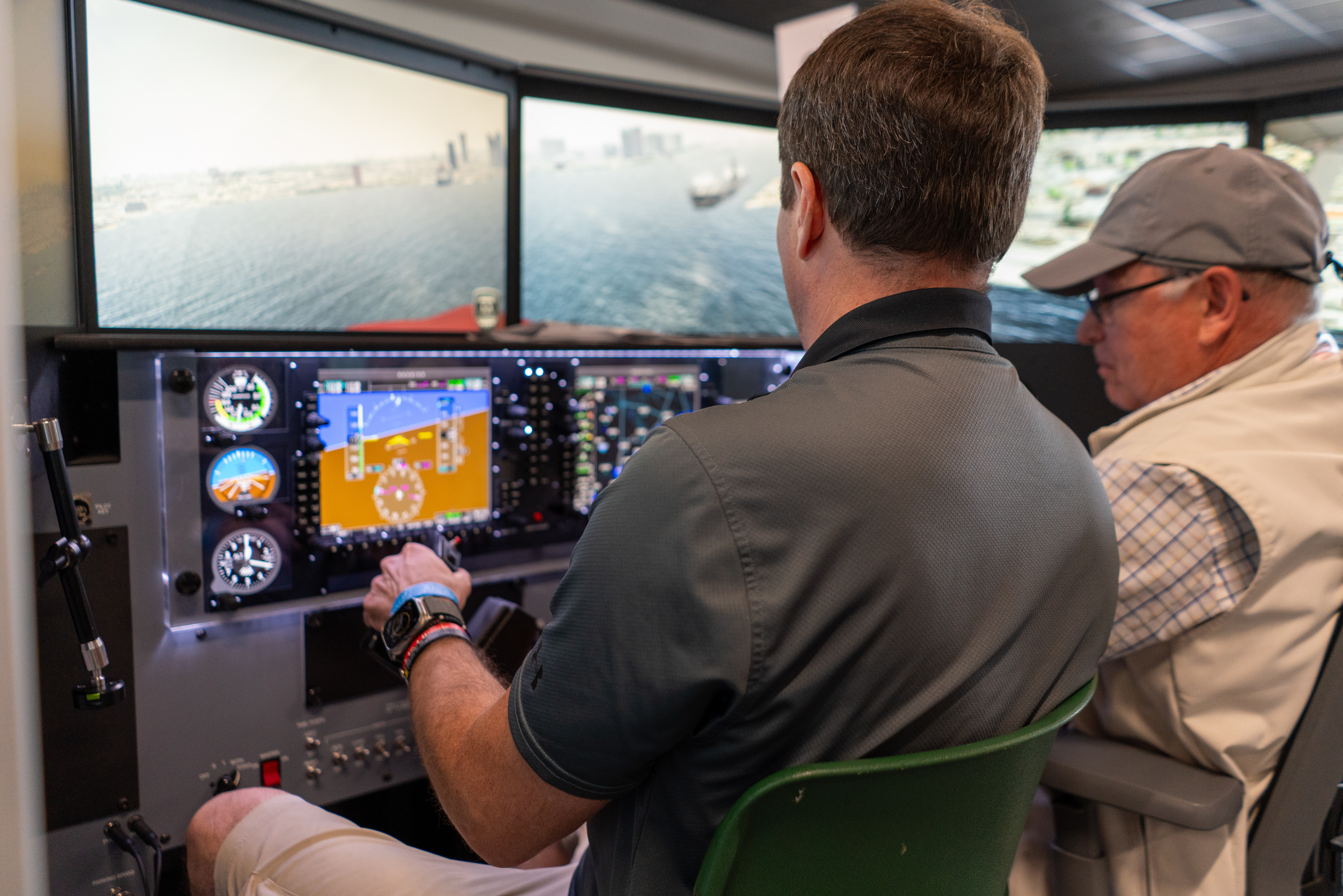
In a flight simulator, all of that falls away. The environment is controlled, the stakes are low, and the instructor can pause the scenario at any moment to talk through what just happened. The learner can repeat the same approach, engine failure, or hold entry as many times as it takes to build proficiency and confidence. There are no fuel costs per reset and no traffic to sequence around.
What the Research Shows
.jpg)
FAA studies on flight simulator effectiveness suggest that learners who begin a new instrument task directly in the aircraft progress slowly, because they are simultaneously managing the airplane, communicating with ATC, and monitoring engine instruments—a cognitive load that limits how much new information they can absorb. By contrast, learners who first encounter the same task in a simulator demonstrate measurable positive transfer back to the aircraft, with transfer effectiveness ratios in published research commonly falling between 0.3 and 0.7—meaning each hour of prior simulator practice on a given task saves roughly 20 to 40 minutes of dual instruction in the airplane.
The discrepancy compounds over the course of a flight training program. Research suggests that learners who use flight simulation during their private pilot training earn their certificates with roughly 5.5 fewer flight training hours than those who do not. At current aircraft rental and CFI rates, five to six hours of dual instruction can represent anywhere from $1,000 to $2,000 or more, depending on the aircraft and market.
For the learner, that is real money. For the flight school, it raises an important strategic question: Is the aircraft rental revenue you give up by replacing those hours worth the outcomes you gain in learner satisfaction, completion rates, and reputation? For most schools, the evidence favors flight-simulator-first training.
The Cost Equation for Learners
The financial case for simulator-first training is not difficult to make to a prospective learner. Most flight schools charge roughly 50 percent of the aircraft rental rate per hour for simulator time. A school charging $180 per hour for a Cessna 172 might charge $85 to $90 for a session in a Redbird Advanced Aviation Training Device (AATD). For the learner, every hour of pre-practice in the simulator reduces the number of aircraft hours they will likely need to reach proficiency on a given task, and that substitution math tends to favor flight simulation heavily.
It is one of the reasons learners tend to value flight simulator training; they understand how it helps them reach their end goal more efficiently.
Beyond pricing, Redbird AATDs can count toward FAA certificate and rating requirements. Learners working toward their private pilot certificate can log up to 2.5 hours of simulator time as flight training time. Those pursuing an instrument rating can log up to 20 hours in an AATD toward the 40 hours of instrument time required, provided an authorized instructor conducts the training and the tasks performed fall within the device’s approval. Twenty hours of AATD time at roughly half the aircraft rate represents a straightforward, significant cost reduction for an instrument learner.
If the National Flight Training Alliance’s recommendations gain traction with the FAA, those credit limits may expand further. Flight schools that have already built simulator-first workflows will be positioned to absorb that expansion immediately, rather than scrambling to adapt after the rule changes.
The Revenue Picture for Flight Schools
For school operators, the revenue argument for simulator-first training is sometimes counterintuitive at first glance. Replacing aircraft revenue with flight simulator revenue looks like a downgrade on a per-hour basis, since hourly simulator rates tend to be lower. However, the complete picture is more interesting.
Simulator sessions are immune to weather cancellations. They do not require fuel, maintenance reserves, or insurance tied to airframe hours. A 90-minute simulator session with a CFI produces a reliable revenue entry on a rainy afternoon that would otherwise produce nothing. Over the course of a year, predictable simulator revenue smooths out the cash-flow peaks and valleys that afflict most Part 61 operations.
Simulator-first scheduling also allows instructors to be more deliberate about what gets accomplished in aircraft time. Rather than spending the first 20 minutes of an IFR lesson reviewing procedures a learner has not fully internalized, the instructor can use the simulator session for that review and arrive at the aircraft lesson with a learner who is ready to actually fly the scenario. That is a more efficient use of the instructor’s time, a better experience for the learner, and a lesson more likely to end with real progress.
Higher-quality lessons tend to produce better completion rates. Learners who feel like they are making consistent, measurable progress are the ones who keep coming back.
Making It Work in Practice
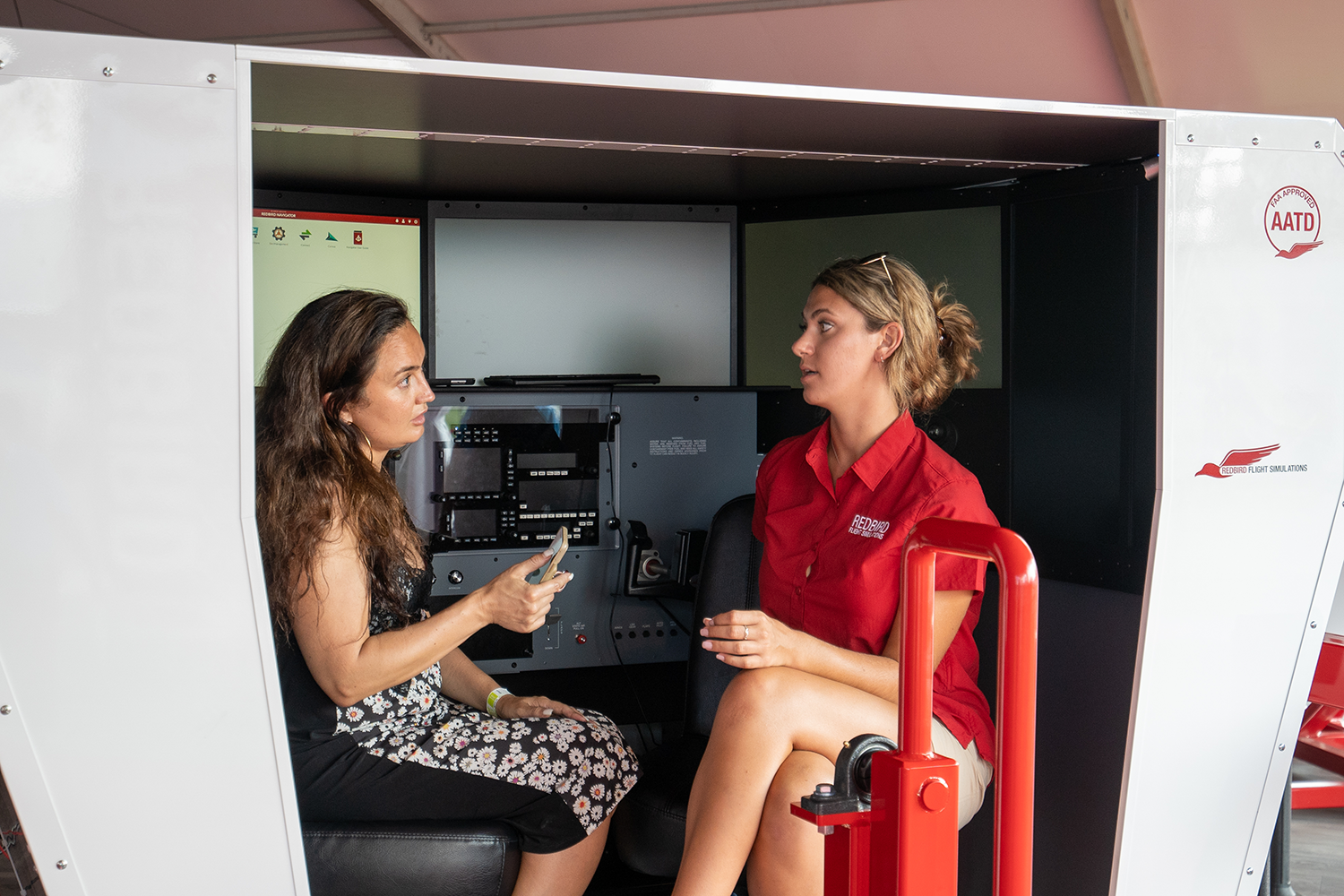
Implementing a flight-simulator-first approach does not require overhauling your curriculum from scratch. A few practical changes can move the needle significantly.
First, build flight simulator sessions into the training plan rather than treating them as supplements. If your flight school offers instrument training, structure the instrument lessons so that every new procedure receives at least one simulator session before the learner sees it in the aircraft. Holds, approaches, partial-panel work, and unusual attitude recovery are all ideal candidates for this sequencing.
Second, brief and debrief every simulator session as seriously as you would a flight lesson. The simulator’s real power lies in what can be discussed during and after the session, not just what gets logged. Instructors who use the pause-and-discuss capability consistently produce learners who demonstrate better understanding when the scenario moves to the aircraft.
Third, price the simulator strategically. A simulator session should not feel like a discount option or a fallback for days when the aircraft is grounded. It is a training tool with distinct capabilities that the aircraft simply cannot offer, and its price should reflect that value. Schools that position the sim as an integral part of a complete training program, rather than as a consolation prize for bad weather, tend to see higher utilization and more engaged learners.
The Bottom Line
The National Flight Training Alliance’s March 2026 recommendations are not writing new ideas into aviation’s future; they are acknowledging what the evidence has been pointing toward for years. Expanded flight simulator credit, recognition of new device categories, and a more outcome-driven model of flight school oversight all reflect the same reality: simulation works, and the flight training industry is increasingly organized around that fact.
Flight schools that have already integrated flight simulators into deliberate, well-sequenced training programs are ahead of this curve, not behind it. The schools waiting for regulatory permission to take simulation seriously may find, when the new rules arrive, that their competitors already have a significant head start.
Share this
How Pilot Training in a Flight Simulator Increases Flight School Revenue
How To Price Your Flight School's Simulators for Maximum Profitability