
%20(3).png?width=40&height=40&name=Redbird%20Flight%20logo%20(red%20bg)%20(3).png)
With geopolitical instability driving global energy volatility, 100LL avgas full-service averages spiked to a staggering $7.20 per gallon in April 2026, and live May data shows prices climbing even higher. Flight schools across the country are running the same high-stakes mental math they face every time fuel climbs: which costs do we absorb, and which do we pass along?
Aircraft rental rates are going up. That part is straightforward. But what happens to your simulator pricing? And more importantly, what should happen to it?
For most schools, the answer is that flight simulator pricing should go up, too. Not because your simulator burns avgas (it does not), but because the pricing conversation is really a positioning conversation, and your simulator is worth more than most schools are currently charging for it.
Where the 50% Guideline Breaks Down
The conventional wisdom in flight training is that flight simulator time should cost roughly half as much as an aircraft rental. If your Cessna 172 rents wet for $180 an hour, the thinking goes, charge about $90 for a sim session. The logic makes plenty of sense. A simulator does not carry the same overhead as an aircraft. No fuel, no oil consumption, no avionics repair bills, no annual inspection.
For these reasons, the 50% guideline is a great starting point for pricing a simulator. It’s common among our customers, and we raise it for consideration among new customers when they ask about pricing.
However, this starting point is just that: a starting point. When it ceases to make sense for a flight school’s operation, it’s time to reevaluate.

Limiting the flight simulator’s perceived value
If flight simulator pricing is tied to aircraft pricing in a way that limits the simulator’s perceived value, then a closer look at the pricing model is necessary. When learners see a $90 simulator rate next to a $180 aircraft rate, the framing may insinuate that the simulator is half as good or useful. That is not accurate, and it is not the message you want to send.
The flight training industry introduced the 50% framework well before flight simulators became as capable as they are today. In certified training devices, learners can log time toward certificates and ratings, practice approaches to minimums in any weather conditions they may encounter, rehearse emergency procedures that would be unsafe or impossible to practice in an aircraft, and build the kind of repetition-based proficiency that produces calm, capable pilots. That is not a discount service, and your pricing strategy should not suggest that it is one.
When something is priced too low, the market assigns it a proportionally low status. This is as true of flight simulators as it is of hotel rooms or consulting fees. When your flight simulator is the cheapest item on your price sheet, flight instructors pick up on that signal and transmit to learners the idea that the sim is something you do when the weather is bad, or when you need to knock out required hours before the checkride.
That attitude is expensive.
-
The school loses potential revenue from a fixed-cost asset that could be generating income on a much more consistent basis.
-
The learner spends more hours in the aircraft working through concepts that could have been practiced more efficiently in the sim.
-
The instructor misses the opportunity to develop the kind of structured, scenario-based teaching that makes simulator sessions genuinely powerful.
Pricing your flight simulator at a rate that reflects its actual training value repositions it, in the minds of both instructors and learners, as a serious professional training tool. That shift in perception can change behavior: Instructors plan for it, learners request it, and utilization climbs.
The Math Works at a Higher Price
The concern school operators sometimes raise is whether learners will push back on higher simulator prices. In most cases, the numbers tell a clear story that makes the conversation straightforward.
Under 14 CFR 61.65, a learner pursuing an instrument rating can log up to 20 hours of flight time in an FAA-approved Redbird Advanced Aviation Training Device (AATD) toward the 40-hour total instrument time requirement. If those 20 hours are completed in the simulator at $120 per hour rather than in an aircraft at $200 per hour, the learner saves $1,600 over the course of the rating. That figure is worth putting in front of every new instrument learner at enrollment.
The savings are real, the training is FAA-approved, and the learning outcomes are well-supported by decades of simulation research. Proficiency on the flight deck is built through repetition, and repetition is less expensive in a flight simulator at virtually any price point below aircraft costs.
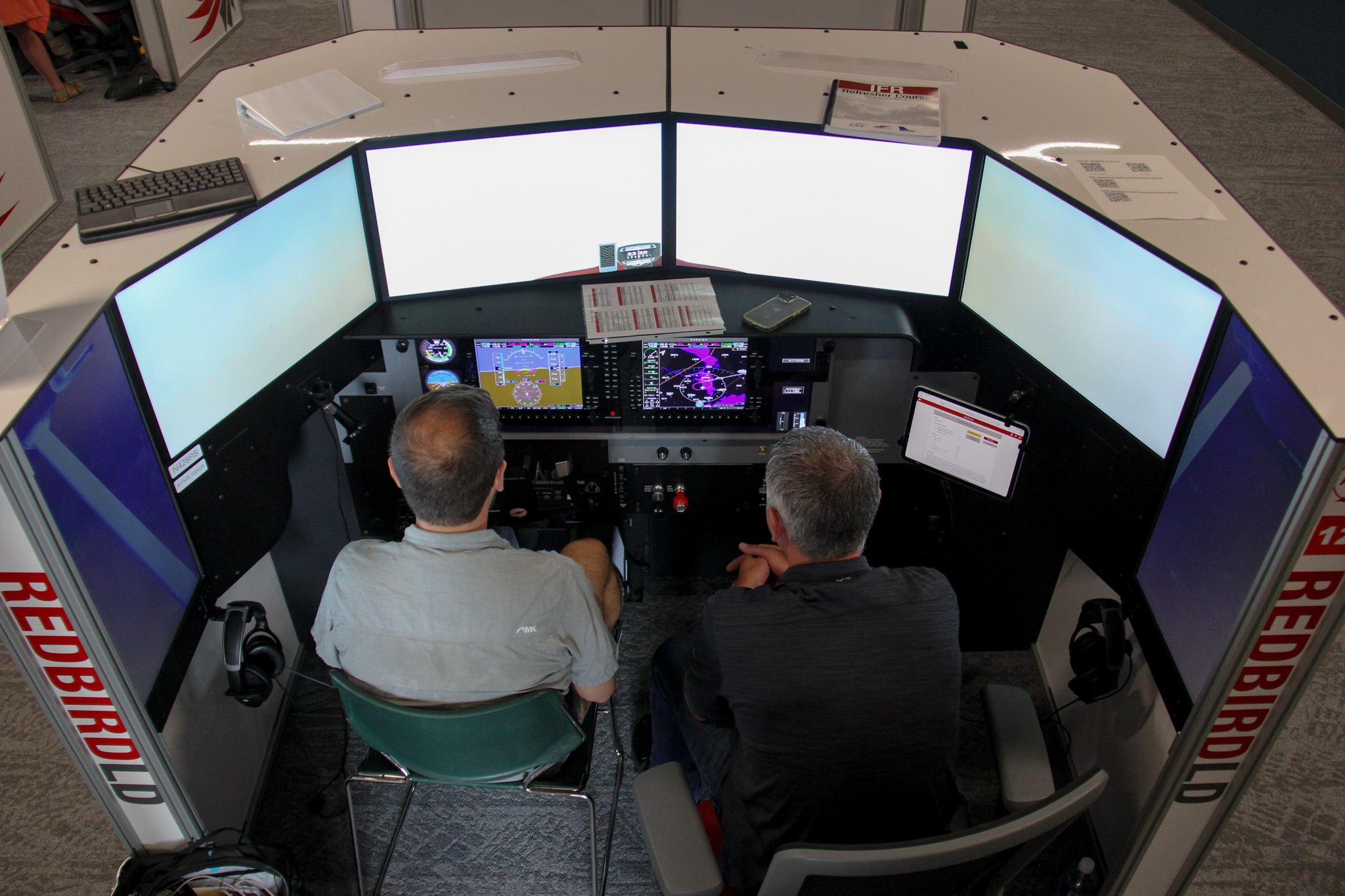
For private pilot learners, the same principle applies. While under Part 61, a learner is capped at logging 2.5 hours toward Aeronautical Experience Requirements in a Basic Aviation Training Device (BATD) or AATD, the benefits of simulation far exceed loggable hours. Schools can use a Redbird effectively to accelerate pre-solo preparation, practice emergency procedure responses, and build the procedural fluency that shortens the aircraft time needed to reach checkride readiness. Framing that value clearly, in dollars, is among the most effective things a school can do to drive voluntary sim usage among learners who might otherwise regard the simulator as optional.
How to adjust prices without losing learners
The practical question is how to adjust simulator pricing when you have already established expectations. A few approaches make the transition smoother.
-
Raise your simulator rate at the same time you raise your aircraft rate. When learners see the aircraft rate increase because of fuel costs, and the simulator rate increase because of the training value it offers, the relative math still strongly favors the sim. Nobody feels double-charged when the context for both changes is transparent.
-
Make the value of the increase explicit. When you notify learners of the new rates, include a brief note about what the simulator provides: FAA-approved training time, scenario practice that is not available in the aircraft, and a lower total cost to certificate. That framing converts what might feel like a price hike into a reminder of a benefit many learners are already underusing.
-
Brief your flight instructors before the rates change. Instructor buy-in is the single most important variable in simulator utilization. An instructor who understands why the new pricing makes sense and can speak to the sim's value with confidence will naturally move learners toward it. An instructor who shrugs and says, "It used to be cheaper," will undermine the effort in the first ground session.
Positioning Is the Point
Fuel prices will keep doing what fuel prices do: move unpredictably and generally upward over time. Every school that relies on aircraft as its primary revenue source will feel that volatility in its margins.
A well-utilized Redbird simulator is a partial hedge against it, generating consistent revenue from a fixed-cost asset that does not burn avgas, require hull insurance adjustments, or go out of service for an annual or unscheduled maintenance event.
However, realizing all the benefits of a flight simulator requires a sound pricing strategy. A simulator priced as an afterthought will be used as an afterthought.
While that does not necessarily mean that abandoning the 50% rule makes sense for every school, it does mean that the schools that extract the most from their Redbird investment are the ones that treat it as a full-fledged training product, price it accordingly, and build their instructional programs around its strengths.
If you have not analyzed the pricing strategy for your training devices recently, then you should use this time as an opportunity to reevaluate. Fuel going up can be a problem. Your Redbird sitting idle at $90 an hour while your Cessna earns $195 is a problem you can solve.
Share this
Why a Flight-Simulator-First Approach to Training Benefits Everyone
-2.jpeg)
How Top Flight Schools Use Full Motion Flight Simulators