
%20(3).png?width=40&height=40&name=Redbird%20Flight%20logo%20(red%20bg)%20(3).png)
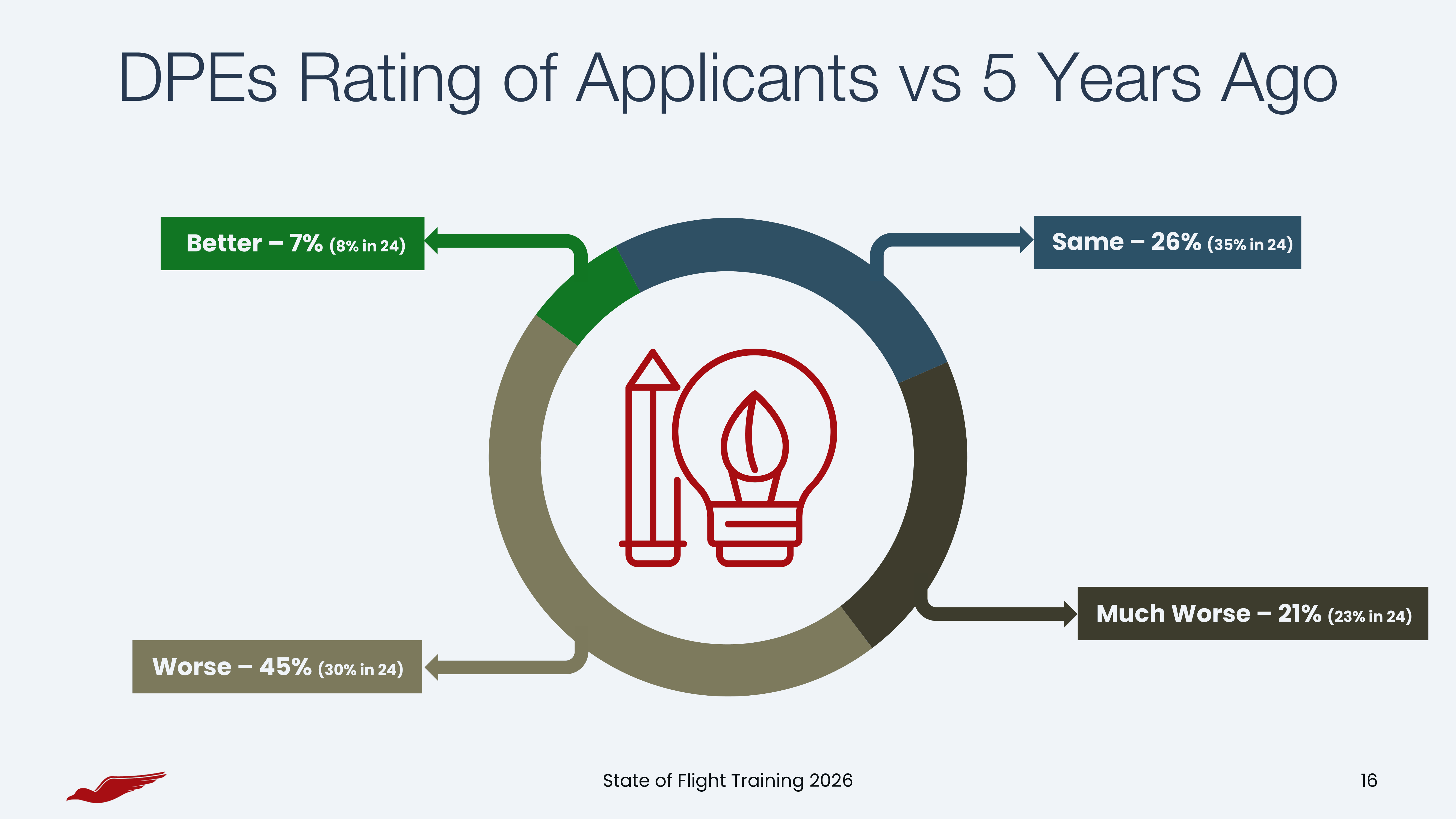
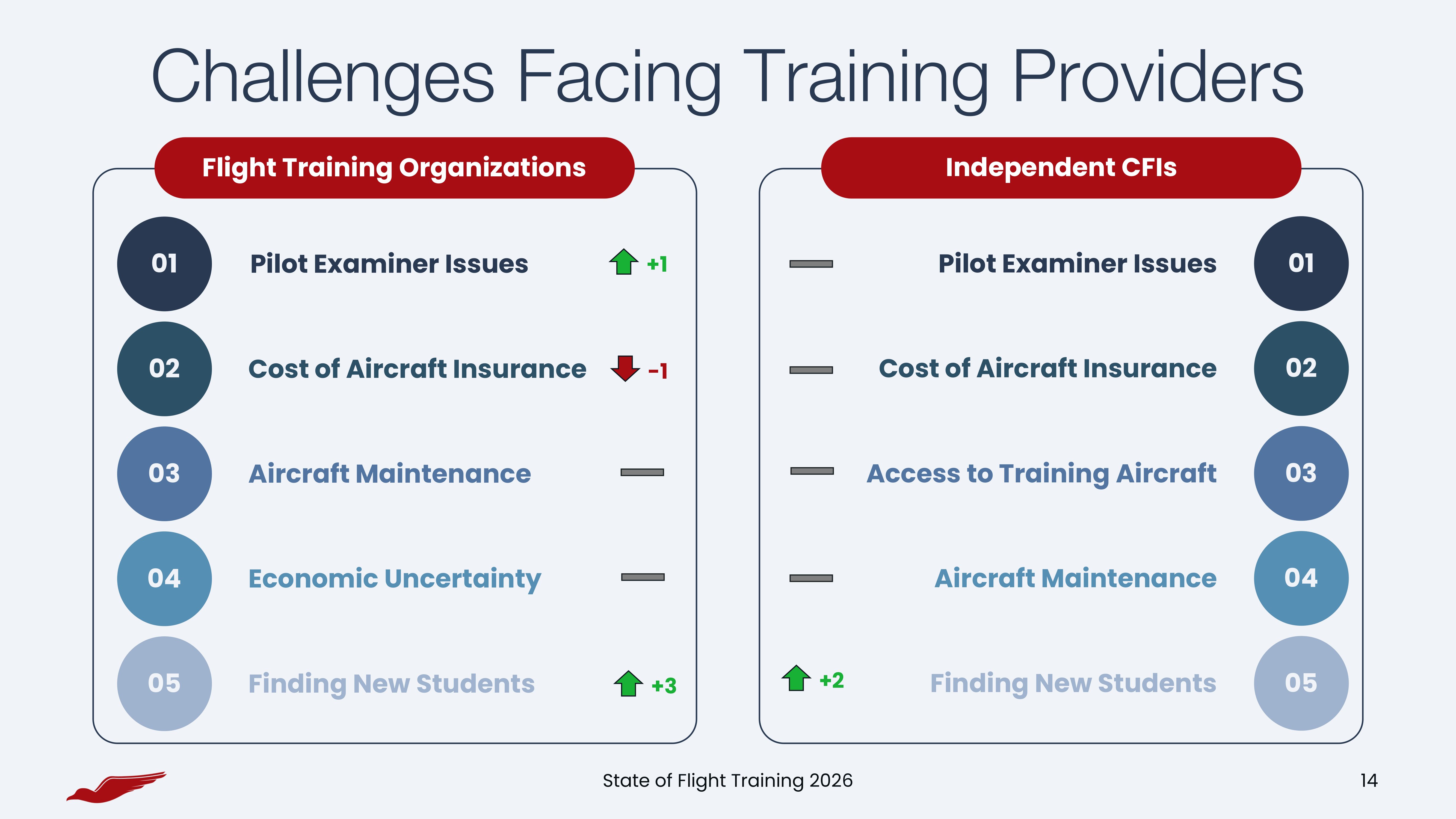
The designated pilot examiner (DPE) shortage has become a chronic problem affecting flight training operations across the country. In many regions, securing a checkride appointment now requires weeks of advance planning, sometimes longer.
The Federal Aviation Administration (FAA) is working on solutions, but obstacles remain. Among them, a proposed requirement that DPEs log at least five hours of pilot-in-command (PIC) time in each make and model before conducting practical tests in that aircraft type, however well-intentioned, could constrain examiner availability further in the short term while the system adjusts.
Add it up, and you get an unenviable combination of scarce examiners, rising DPE fees, and lengthening wait times. A first-time checkride failure in this environment is considerably more expensive than it was a decade ago, both financially and logistically. A “bust” now means rebooking, retraining, paying again, and often waiting again. For a learner who was almost ready but not quite, that is a high and entirely avoidable cost.
Why Checkrides Go Wrong
When learners fail practical tests, the causes are not always dramatic. Examiners observe task saturation under stress, gaps in systems knowledge that surface during the oral, procedural hesitation at the wrong moment, or perhaps a general brittleness when something unexpected happens during the flight portion.
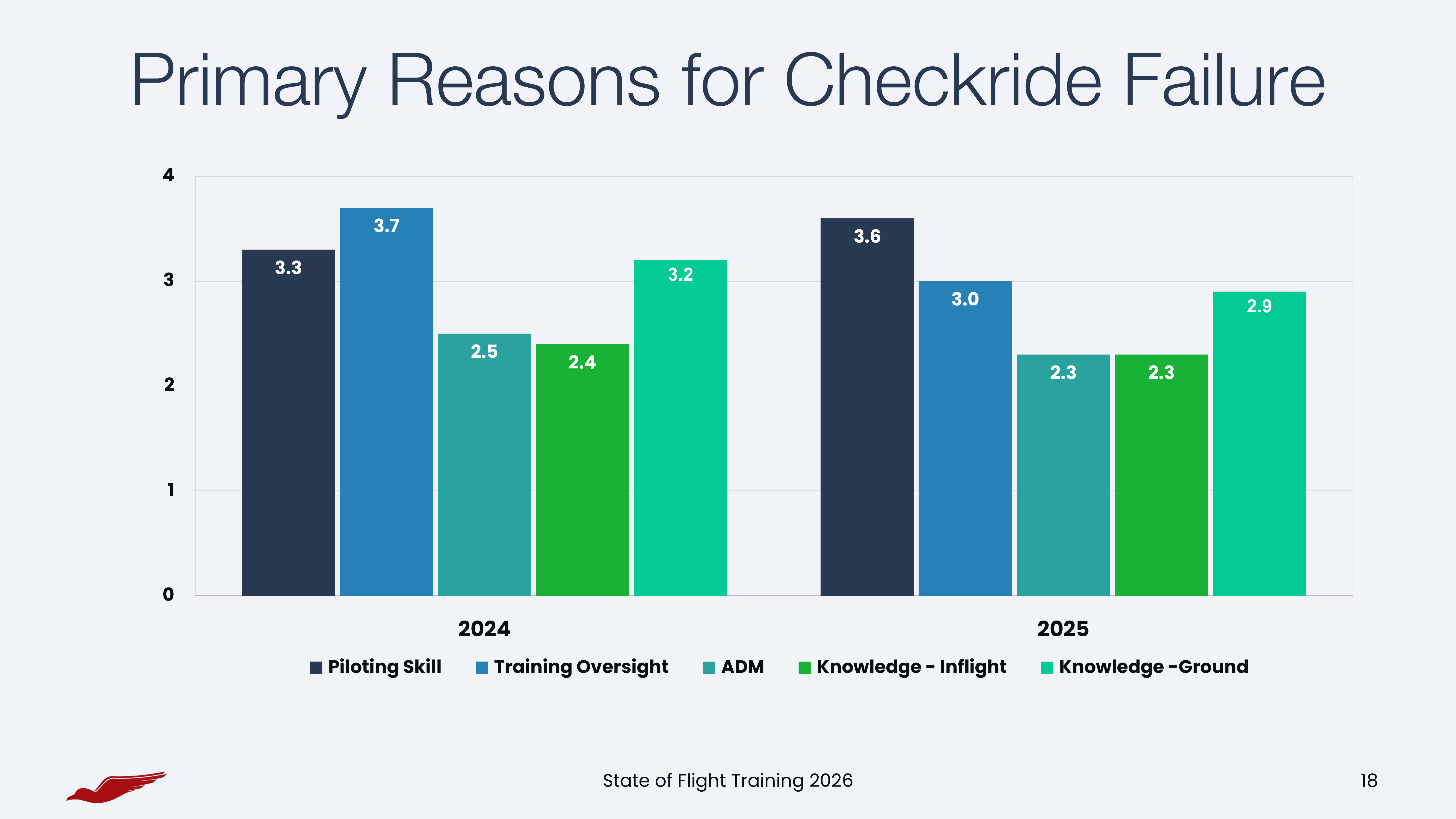
Source: The State of Flight Training Report
These issues often are products of insufficient training and repetition in high-demand situations. Fortunately, learners have several levers they can pull to prepare more effectively. Perhaps most notably, learners who train meaningfully in flight simulators before their practical tests tend to perform better on them.
Military flight training programs have observed this for years. For example, research on Army helicopter training found that incorporating simulator usage produced superior checkride performance compared to aircraft-only training, and that 12 hours of simulator time effectively replaced 12 hours of aircraft time without any reduction in demonstrated competency at evaluation.
How Flight Simulation Helps With Checkride Preparation
Flight simulators offer instructors a controlled environment that allows for repetitive, situational, and real-time learning that can increase a learner’s depth of knowledge. For example, the learner who has performed 40 approaches in an aviation training device (ATD) and can explain why the localizer reverses during a missed approach is less likely to freeze during the oral. Similarly, the learner who has practiced a vacuum failure, recovered, and continued an approach three separate times is less likely to melt down when the DPE covers an instrument during the flight portion.
Scenario-Based Learning
There are things you simply cannot train in the aircraft because they are too dangerous, expensive, or impossible to reliably produce. Among others, these include simulated engine failures on takeoff, vacuum pump failures in actual IMC, electrical emergencies at night, and partial panel ILS with simultaneous ATC communication and adverse weather.
A DPE can ask about any of those scenarios, and learners who have only read about them are at a disadvantage. Those who have experienced them, even in a simulator, possess a different kind of knowledge that comes with having done it, made a decision, and either succeeded or been corrected before trying again.
The scenario engine in Redbird training devices allows instructors to build and repeat exactly the kinds of situations that appear on practical tests. The instructor can back up the scenario and run it again if the learner made a poor choice, rather than accepting one pass at a situation that may never recur naturally in the aircraft.
Depth of Knowledge
Checkride busts happen during orals more often than you might think. Learners frequently stumble over weight and balance, struggle to walk through a system failure logically, or go blank when asked about an unfamiliar airspace classification.
This is almost entirely a function of preparation depth. Thorough examiners know how to expose applicants whose understanding of critical topics stops at rote memorization.
While not the use case many learners or flight instructors envision for simulator time, oral exam prep in an ATD offers the unique opportunity to talk through what is happening in real time. An instructor using an ATD can pause the session mid-approach, ask the learner to explain what they see and why they are making certain choices, and then resume.
That kind of embedded oral practice, repeated across the arc of training, is among the most effective checkride prep available. It mirrors the intellectual pressure of the practical test, but in an environment where the cost of a wrong answer is a teaching moment rather than a failure notation.
Instructors who use a flight simulator this way consistently report that their learners arrive at the oral exam with fewer knowledge gaps and more confidence in articulating their reasoning under pressure.
Integrating a Flight Simulator Effectively Into Checkride Prep
Simulator training is most effective when integrated throughout the training syllabus, not deployed as a last-minute cramming tool. Learners who have accumulated meaningful simulator hours across their training arrive at the final phase already familiar with checkride scenarios, comfortable discussing systems under pressure, and accustomed to performing while being observed.
That said, a focused flight simulator session, or a short series of them, in the two to three weeks before the practical test has real value. Think of it as a concentrated review of the Airman Certification Standards conducted in an environment where mistakes are free and repetition is unlimited. There is no more cost-effective way to spend training hours in the final stretch.
What This Means for Your Flight School
First-time checkride pass rates are a marketing metric whether schools want to acknowledge it or not. Prospective learners ask about them. So do their parents, employers, and the veteran pilots who refer new learners to schools they trust.
Schools that can demonstrate high first-time pass rates attract more learners and retain them longer. A learner who passes on the first attempt is far more likely to continue to the next rating than one who failed and spent the following month recovering from the experience, financially and emotionally.
If your school owns an ATD, the most direct investment you can make in your pass rates is to use it systematically in the final preparation phase of every rating. Build simulator sessions into your standard syllabi for private, instrument, and commercial training. Document what you do. Track the outcomes. The data will follow, and so will the referrals.
The DPE shortage is not going to resolve quickly. Getting an appointment will continue to be difficult, and the cost of a bust will continue to rise. The best insurance against that cost is preparation, and the most effective preparation tool available is sitting in your simulator bay.
Share this
The Engine Failure Fallacy
Preflight Planning: 11 Items You Might be Missing